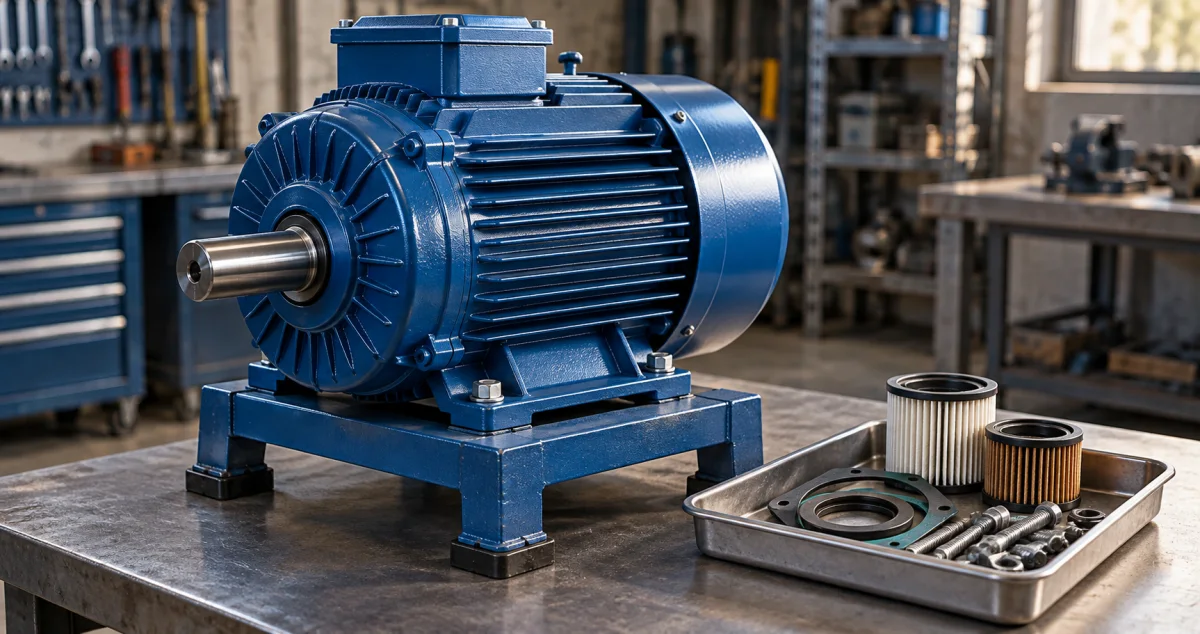
Maintenance requests an expensive standby motor. The warehouse records it alongside screws and filters because they are all “spare parts.” But a shelf label is not an accounting policy. A part might be held for resale, consumed during routine servicing or used over a longer period in operating equipment. Its purpose can change classification and monitoring even when two items share the same commercial description.
IAS 16 treats spare parts, standby equipment and servicing equipment as property, plant and equipment when they meet that definition; otherwise they are inventory. There is no sound blanket rule that every expensive part is a fixed asset or that everything stored in a warehouse is current inventory.
Consider intended use before price
Imagine three purchases: filters consumed in routine servicing, a standby motor dedicated to a production line and identical motors bought for resale. Physical similarity does not remove the difference in purpose. Describe intended use, expected duration and connection with operations, then apply the relevant recognition requirements and policy.
Use over more than one period in production may support treating the standby motor as an asset when the other conditions are satisfied. Resale motors follow the merchandise inventory route. Routine filters need tracking until use, with their cost then assigned according to the work in which they are consumed. Do not assume every maintenance issue goes to the same account regardless of its nature.
Ask maintenance for information accounting staff cannot independently supply. Does the part serve a particular machine? Can it work elsewhere? How long is it expected to provide benefit? Will it still be suitable after the production line is replaced? These answers are more informative than “emergency spare,” which says little about economic life.
A technical record that complements the invoice
A practical item record can include:
- A stable identifier and serial number where relevant, together with location and custodian.
- Approved purpose: resale, maintenance consumption or longer-term operational standby.
- Related equipment or component, expected-life support and technical condition.
- Cost, supporting documents and relevant readiness or installation dates.
- The classification decision and reviewer, with a route for recording later changes in use.
An asset stored in a warehouse still needs physical verification. Moving its accounting record to the asset register should not make it invisible to the warehouse custodian. Link the records while preventing the same value from appearing in both inventory and fixed-asset accounts. Operational tracking and financial classification serve different purposes and can work together.
Component replacement is not a blind addition
Assume, after reviewing recognition requirements, a new component costing SAR 90,000 replaces one with a remaining carrying amount of SAR 12,000. Where the circumstances require recognition of the new component and derecognition of the old one, adding SAR 90,000 while retaining the old amount would incorrectly treat both as continuing parts of the asset. The example shows why an asset register needs component detail rather than only the machine's total original cost.
If the old component's amount is not separately visible, that creates an estimation and accounting-review issue, not permission to ignore it. Collect original asset costs, replacement documents, age and depreciation information for the responsible specialist to assess. Do not invent a universal percentage for every replacement to work around incomplete records.
Also review spares dedicated to a machine taken out of service. Being unused does not preserve their value indefinitely, and the business may have no alternative use for them. Connect equipment-retirement decisions with reviews of associated maintenance stock and standby assets instead of rediscovering them years later during warehouse clearance.
Good classification starts before purchase, when purpose can be established, but does not end with entering the invoice. Track movement, installation, replacement and changing operational plans, recording the reason for each change. The records should reflect what the business can actually benefit from, not merely descriptions left on old shelf cards.
Sources & further reading
Visit the original source to explore the concept and its wider context.
General educational content. Appropriate treatment depends on your business and accounting policies; consult your accounting professional when applying it to business records.